
Blog
Best Handmade Soap in Bangladesh: What Should You Look For?

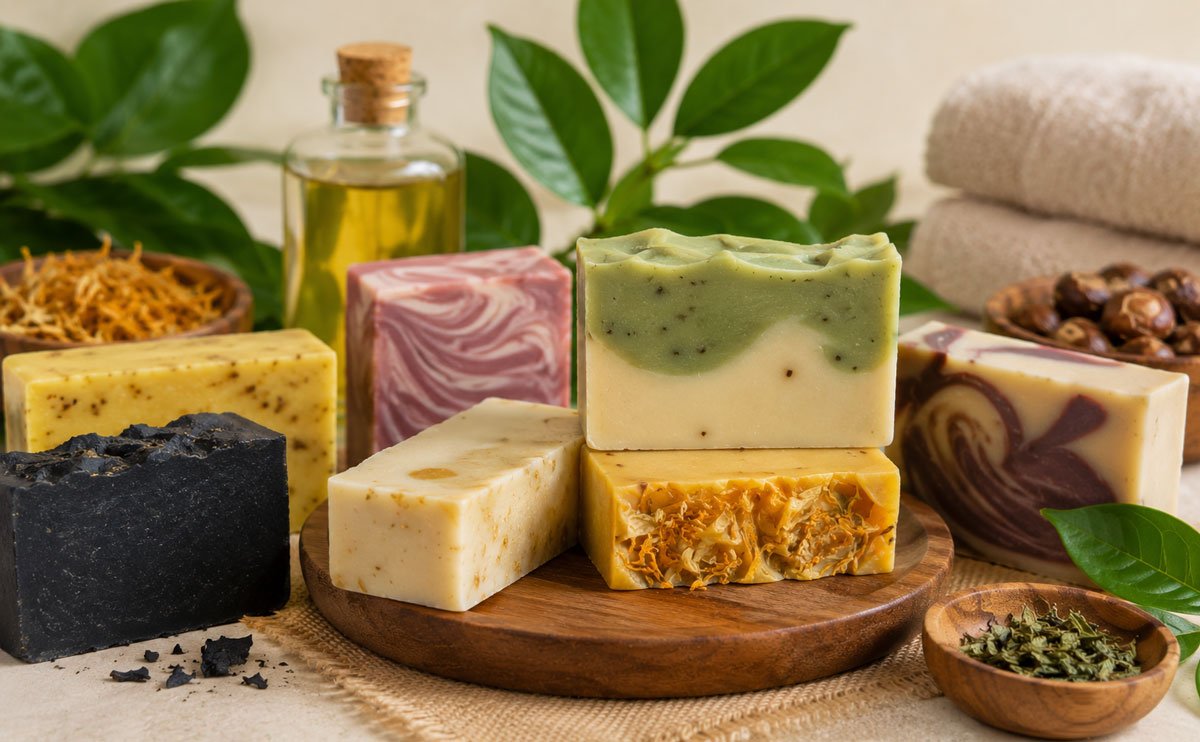
Search for the best handmade soap in Bangladesh, and you will find plenty of choices.
Neem soap, charcoal soap, turmeric soap, herbal soap, natural soap—the list keeps growing. But choosing a good soap is not really about picking the product with the longest ingredient list or the biggest promise.
The truth is simple: there is no single “best” soap for everyone.
Your skin, the formulation, the ingredients and the way the soap is made all matter. So instead of asking only, “Which handmade soap is best?”, it is more useful to ask:
1. Start With the Ingredient List
This is probably the simplest place to start.
Turn the package around and look at what is actually inside the soap. A responsible handmade soap brand should be comfortable telling you what it uses.
Words such as “natural,” “herbal,” “organic” or “premium” may sound attractive, but those words alone do not tell you much about the actual formulation.
Depending on the recipe, handmade soap may contain plant-based oils, botanical ingredients, clays, powders and essential oils. But a longer ingredient list does not automatically mean a better soap.
What matters is how those ingredients work together in the finished formulation.
2. Understand How the Soap Is Made
Not every handmade-looking soap bar is made in the same way.
Some soaps are created using a ready-made melt-and-pour base. Others are made from scratch using the traditional cold process soapmaking method.
In cold process soapmaking, oils are combined with a carefully calculated solution of sodium hydroxide and water. This begins a chemical reaction called saponification, which transforms the ingredients into soap.
The soap is then poured into molds, allowed to set, cut into individual bars and given time to cure before it is ready for use.
You cannot always tell how a soap was made just by looking at it. If the production method matters to you, it is worth checking what the maker says about the process.
3. Choose for Your Skin, Not for the Trend
It is easy to choose skincare because an ingredient is popular online.
One month everyone is talking about charcoal. Another time it may be neem, turmeric or a different botanical ingredient.
But popularity does not automatically make an ingredient or formulation right for your skin.
Think about what you actually want from your cleansing routine.
- Does your skin often feel dry after washing?
- Does your skin tend to become oily quickly?
- Are you sensitive to strong fragrances?
- Are you simply looking for an everyday cleansing bar?
Different formulations serve different needs, and what works well for one person may not feel the same on someone else's skin.
Choose for your skin—not for the trend.
And if you are dealing with a persistent or serious skin condition, soap should not be treated as a replacement for professional medical advice or treatment.
4. Be Careful With Miracle Claims
This is something we think customers should pay attention to.
Soap is a wash-off product. A well-formulated soap can cleanse the skin and provide a comfortable and enjoyable washing experience.
But it is worth being cautious when a soap is advertised as if it can solve every skin concern.
“Removes acne permanently.”
“Makes skin fair in 7 days.”
“Cures every skin problem.”
“Instantly removes pigmentation.”
Skincare does not usually work that way.
At Leafsy, we would rather explain what goes into our products and how they are made than promise an overnight transformation.
5. “Natural” Does Not Automatically Mean Better
This may sound unusual coming from a natural skincare brand, but it is important.
Something being natural does not automatically make it suitable for every person. Essential oils, botanical powders and other plant-derived ingredients can still feel different on different skin types.
At the same time, the word “chemical” should not automatically be treated as something frightening.
Soapmaking itself is chemistry. The transformation of oils into soap happens through a chemical reaction.
So rather than relying only on phrases such as “natural” or “chemical-free,” look at the actual ingredients, formulation and transparency of the maker.
6. Look at the Oils Used in the Soap
Oils are the foundation of a cold process soap formula.
They are not included simply because their names sound luxurious. Different oils contribute different characteristics to a finished bar, so creating a good soap is largely about finding the right balance.
At Leafsy, we work with a combination of oils including coconut oil, olive oil, plum oil, castor oil and sunflower oil. Depending on the individual soap, we also use different essential oils and botanical ingredients to create each formulation.
| Oil | Role in Soap Formulation |
|---|---|
| Coconut Oil | Contributes to cleansing, bar hardness and bubbly lather. |
| Olive Oil | Helps contribute to a milder-feeling and conditioning bar. |
| Plum Oil | Used in selected formulations for its emollient qualities and the skin feel it can contribute to the finished product. |
| Castor Oil | Commonly used to help support and stabilize lather. |
| Sunflower Oil | Contributes conditioning qualities and helps balance the overall formulation. |
| Essential Oils | Different essential oils are selected depending on the individual soap formulation, including for their aroma and overall sensory experience. |
The important part is not using the largest possible number of oils. Each ingredient needs to have a reason for being part of the formulation.
7. Check Whether the Soap Has Been Properly Cured
Genuine cold process soap takes time.
After a batch is made and cut into individual bars, the soap needs time to cure. This is not the most visible part of soapmaking, but it is an important one.
During the curing period, water gradually evaporates from the bars. As the soap cures, it becomes harder and generally lasts better during normal use.
This is one reason cold process soap cannot simply be made today and placed on the shelf tomorrow.
For a small-batch maker, curing requires patience, planning and enough time between making a batch and offering it to customers.
8. Do Not Judge Handmade Soap Only by Appearance
Beautiful swirls, smooth edges and carefully chosen colors can make a soap look attractive. But appearance alone cannot tell you whether a soap has been formulated well.
Small-batch handmade soaps may naturally have slight differences from one batch to another.
Botanical ingredients can create small variations in shade, patterns can look slightly different and every cut may not be perfectly identical.
That does not mean hygiene, consistency or quality control are unimportant. Those things absolutely matter.
It simply means a handmade product does not have to look factory-identical to have been carefully made.
9. Think About Fragrance Too
Fragrance can be an enjoyable part of using soap, but stronger is not always better.
Different handmade soap formulations may use different essential oils or other aromatic ingredients depending on the intended character of the bar.
At Leafsy, we use different essential oils depending on the individual soap formulation rather than relying on one essential oil across every product.
If you know your skin is sensitive to fragrance or certain aromatic ingredients, check the product's ingredient list before buying.
And remember: a botanical origin does not automatically mean an ingredient will suit everyone.
10. Transparency Matters More Than Fancy Marketing
If we had to choose one thing that matters when buying handmade soap, transparency would be high on the list.
Before buying, ask yourself:
- Can you see what ingredients are used?
- Does the brand explain how its soap is made?
- Are the product claims realistic?
- Can you ask the maker questions if something is unclear?
- Do you understand what you are actually buying?
Beautiful packaging can make a good first impression.
But when you are choosing something that will regularly come into contact with your skin, honest information matters more.
So, What Is the Best Handmade Soap in Bangladesh?
The answer depends on you.
The best handmade soap in Bangladesh is not necessarily the one with the strongest fragrance, the highest price, the most botanical ingredients or the biggest marketing claims.
A better choice is a thoughtfully formulated soap that suits your needs and comes from a maker you feel comfortable trusting.
- The ingredient list
- How the soap is made
- Whether the formulation suits your needs
- Whether the claims sound realistic
- How transparent the maker is
- Whether cold process soap has been given enough time to cure
How We Approach Handmade Soap at Leafsy
Leafsy is a small handmade skincare brand in Bangladesh.
We make our soaps in small batches using the cold process method. Our formulations use carefully selected oils, and different soaps may include different essential oils and botanical ingredients.
But we do not think the word “handmade” alone should be enough to earn someone's trust.
Trust should come from how a product is formulated, how carefully it is made and how honestly it is presented.
That is why we focus on clear ingredient information, thoughtful formulations and realistic expectations.
No mystery ingredient list.
No overnight miracle promise.
Just small-batch soap made with thought and care.
We think customers deserve to understand what they are buying instead of having to rely only on marketing language.
Before You Buy Your Next Handmade Soap
Take a minute before clicking “Buy Now.”
Read the ingredients.
Look at how the soap is made.
Ignore unrealistic promises.
Think about what your own skin actually needs.
And if something is unclear, ask the maker.
Whether you eventually choose Leafsy or another handmade soap brand in Bangladesh, being an informed customer can help you make a more confident decision.
For us, good skincare starts with something simple: knowing what you are using and understanding why it is there.
Explore Leafsy Handmade Soaps
Discover our small-batch cold process soaps made with carefully selected oils, essential oils and botanical ingredients.
Explore Leafsy Handmade Soaps